Official title: Science Collective Project
The project requires students from different scientific fields (Physics, Chemistry, Biology, Computer Science — mainly natural sciences) to collaborate on solving a real-world problem. It feels a bit like a mini-MUN conference in its discussion style.
Compared to other schools, I have to appreciate how much freedom and flexibility UWCSEA East offers in this regard — and how tolerant they are in execution. I looked it up: many other schools just have students make posters and present, which really lowers the fun factor.
The activity itself is quite meaningful. We had to choose one of the UN’s Sustainable Development Goals as our theme and design various puzzles around it. For example, our group picked Goal 2: Zero Hunger, so all our puzzles were related to food, reducing waste, and relevant data.
The aim was to promote collaboration and applying interdisciplinary knowledge in a “learning through play” format — deepening students’ understanding of the SDGs, their progress, and efforts made by different countries. Ultimately, it encourages us to take these issues seriously, lead by example, and contribute in whatever way we can.
In practice, though, there were some gaps between the vision and the execution.
For instance, the group working on Goal 3: Good Health and Well-being used a Batman and Joker theme — creative, yes, but not strongly tied to the actual goal. I expected content on the importance of health, ways to maintain it, or key details to focus on — but it leaned more on fictional data. Still fun, just not as meaningful as the theme intended. That said, with tests, exams, IAs, EEs, and personal statements piling up every 2–3 days lately, it was a nice break.
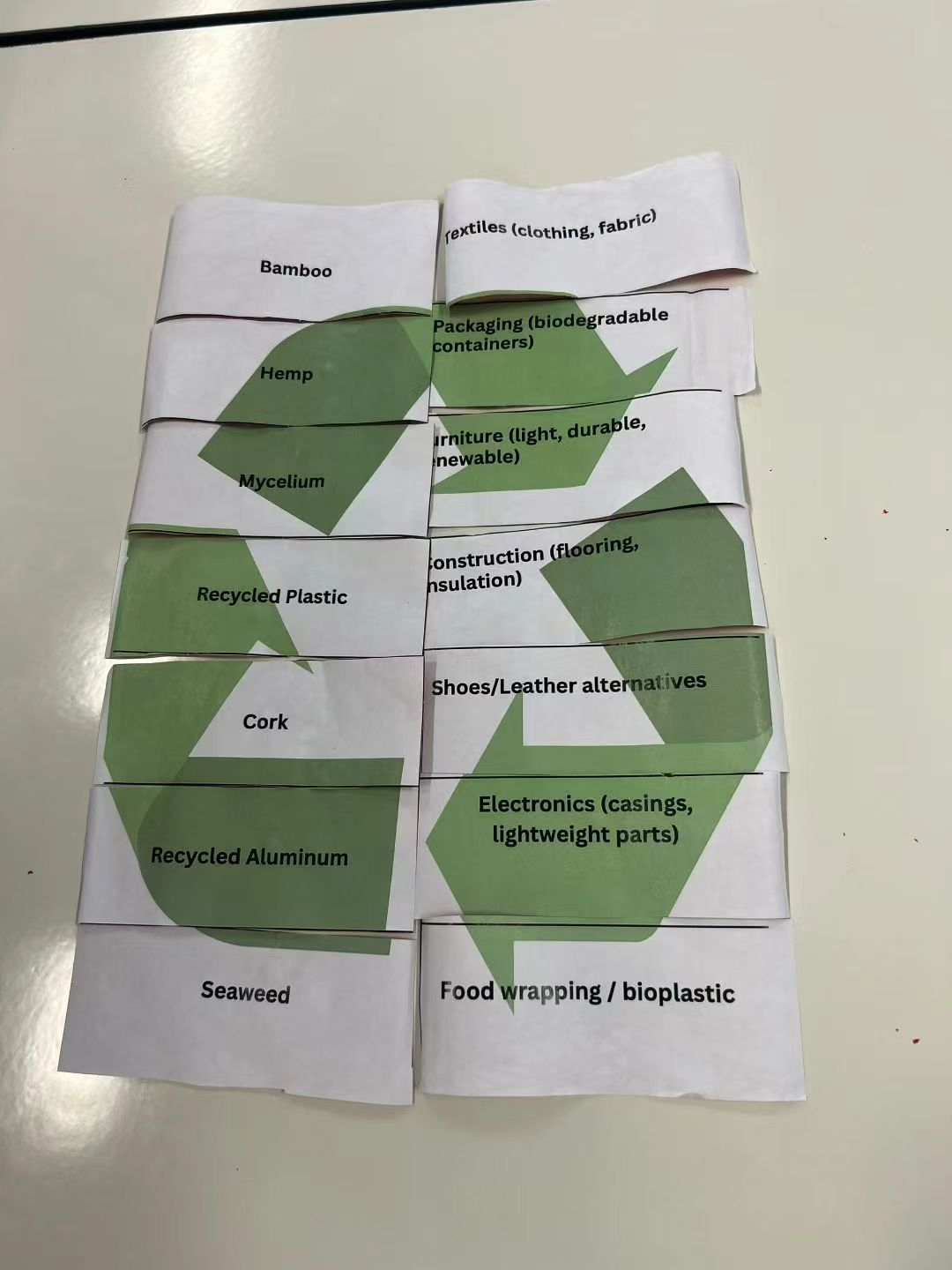
Another group tackling Goal 13: Climate Action stayed much closer to the theme — their puzzles included timelines of climate initiatives and recycled symbol puzzles. Though I felt the final answer wasn’t clearly tied to the ♻️ symbol’s direction — a missed opportunity for depth. Still, theirs was one of the more relevant setups (even if a bit easy — we solved it in about 20 minutes).
I contributed to our group’s puzzle design by suggesting using riddles written in poetic form to hint at the key’s location. I also proposed giving clues in multiple languages (Chinese, English, French, Spanish), with only one being real and the rest false — all while strengthening the “Zero Hunger” theme connection. These ideas were adopted and well-received.
Hiding the key was surprisingly fun — it might have been the first time I really looked closely at every corner of the classroom, thinking about hiding spots, difficulty levels, and matching hints.
Finding a clever spot and watching classmates search for it was a fresh experience. We also exchanged ideas, discussed what would work — which, from an IB perspective, strengthened our skills in listening, thinking, communicating, and reflecting. Seeing other students’ creative approaches was a treat in itself.
All in all, these 1.25 days of SCP came at just the right time. It wasn’t just a break from our academic load — it also brought our mentor group together. Through designing and solving puzzles, we applied knowledge, stretched our thinking, strengthened bonds, and moved forward as a team.
This event gave us a rare moment of calm, while deepening our understanding of specific SDGs — all through a fresh, engaging approach not commonly seen in many schools.
(Our mentor mentioned that the Dover campus doesn’t run full-day, grade-wide off-timetable activities like this. Yet another reason East feels a little more golden lol.)
P.S. First time seeing a lock made from a single-use plastic bottle cap — apparently used to lock drinks and make them harder to open. (Too bad our teacher didn’t allow phones — no photo!)


