(Science + Case Studies + Data + Stories)
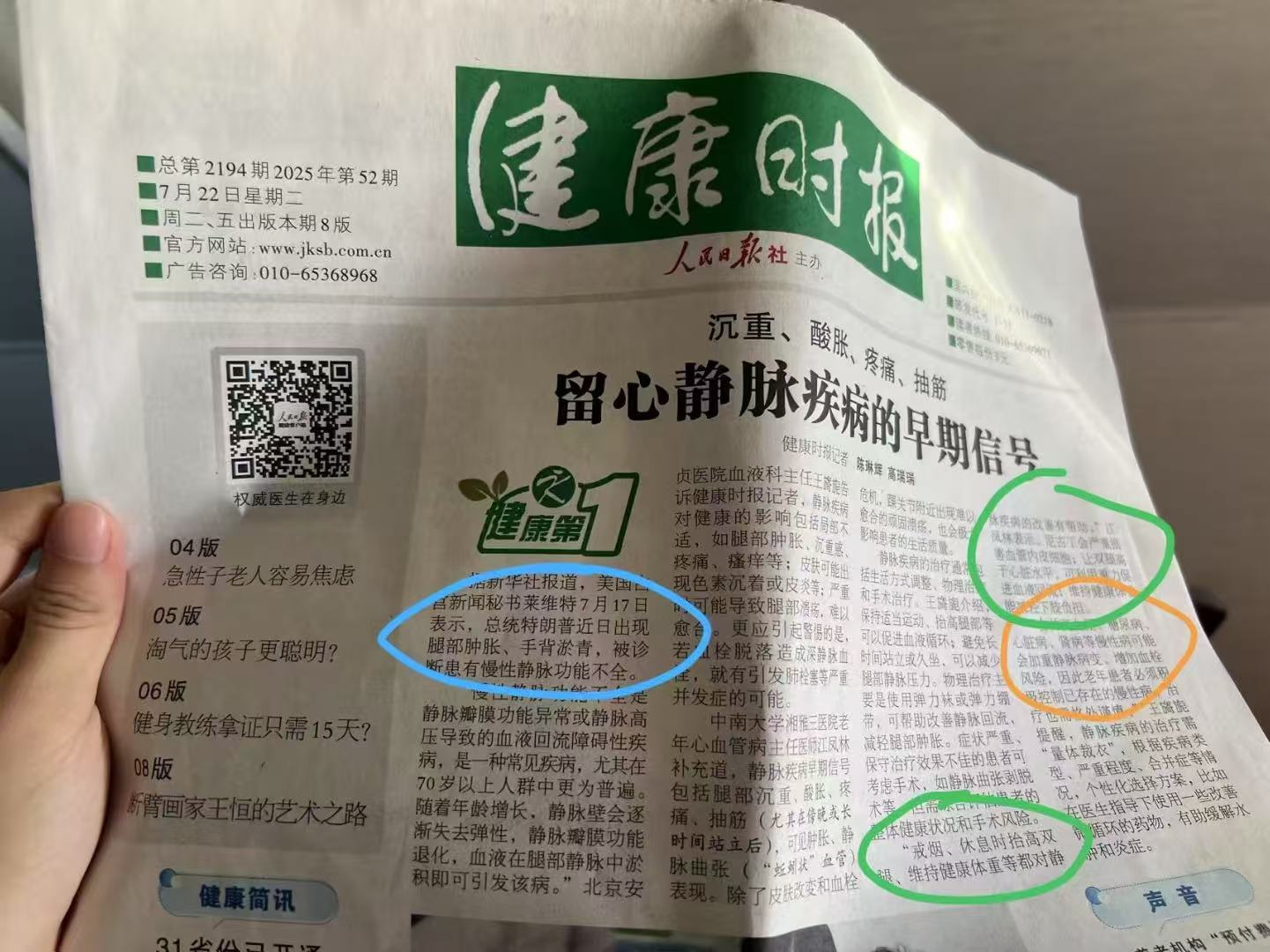
I picked up a random newspaper after boarding and unexpectedly found plenty of useful and interesting information—far more meaningful than tracking which celebrity did what.

P1 opened with an article on Donald Trump’s chronic venous insufficiency. It went on to detail related symptoms, helpful practices, and interactions with other conditions.

P2 served as a wake-up call, especially for young men: among 4.65 million cases, half of heart attack-related deaths showed no prior symptoms—with young men at higher risk. You might think staying up late and eating poorly isn’t a big deal, but you could already be “halfway buried.” Better keep those healthy habits.

P3 felt even more relevant to young people: excess sugar intake increases the body’s demand for vitamins, which can harm eyesight. Data showed that a normal diet already meets daily vitamin needs—sodas, desserts, and even fruit juice almost certainly put you over the limit.


P4–5 discussed how seniors often grow anxious as they lose a sense of purpose and physical strength (sounds familiar to young people in tech or repetitive jobs, especially with overtime and poor health). Later sections highlighted the benefits of family affirmation, exercise, and learning new skills like photography.

P6 surprised me: improper shaking while soothing a baby carries serious risks. Infants’ underdeveloped brains are highly vulnerable to severe injury or even death from shaken motions. A reminder for future parents—you can’t just wing it. Both partners, regardless of gender, should learn safe caregiving.

P7, while focused on PCOS, offered advice applicable to everyone: increase high-quality protein (beef, fish), eat more low-GI foods (whole grains), and follow the veggie → protein → carbs order to aid digestion (finally saw this tip outside of videos!). And yes, the usual but crucial 7–9 hours of regular sleep—messing up your schedule, even with total hours met, isn’t healthy.

P8 portrayed struggles among older men ashamed of sexual health issues, fearing judgment or dismissal by their children. This mirrors challenges in regions with poor sex education. The article urged not to ignore symptoms or seek unqualified treatment—what starts small can turn severe.

P9 closed with a heartwarming story: Wang Heng, who lost his arms in an electrical accident at age four, became a traditional Chinese painter through relentless practice.
His name, “Heng” (perseverance), reflected his father’s wish for him to persist in what he loves. Wang’s achievements came not only from his resilient mindset but also from unwavering support—his father never punished his childhood mischief, encouraged his sports pursuits, and sought mentors for his art dreams through sleepless nights. His teachers never lowered standards, paving his award-winning path.
His father even designed special brushes that could attach to Wang’s residual limbs and saved tirelessly to afford art books from afar. Here, “a father’s love is like a mountain” became tangible.
In the end, Wang married, had two children, and vowed to support their passions as his father did—not by replicating his own childhood, but by offering the same fierce, faithful backing.
— Xiao Chen Stories
July 23, 2024, 11 p.m.